
This was originally written for my WAYLA? (What are you looking at?) nature-writing newsletter.
Boxing Day Fulmar Count
It was blustery and chilly with some rain in the air. A grown up stepchild declined to walk on the beach in case it ruined their trainers. The tide was low and once past the stacks the throaty laughter of fulmars carried on the air. Most people marched up and down, talking or paying attention to dogs or children. Few people gazed up at the cliffs to see where the laughter was coming from or what the swooping birds were.
I must confess I was marching myself. Hands in pockets and probably a bit hunched up because of the weather. My husband though, he was determined, and that is how I know there were 41 fulmars peppering the cliffs between where we walked on to the beach and the stairs we left by.
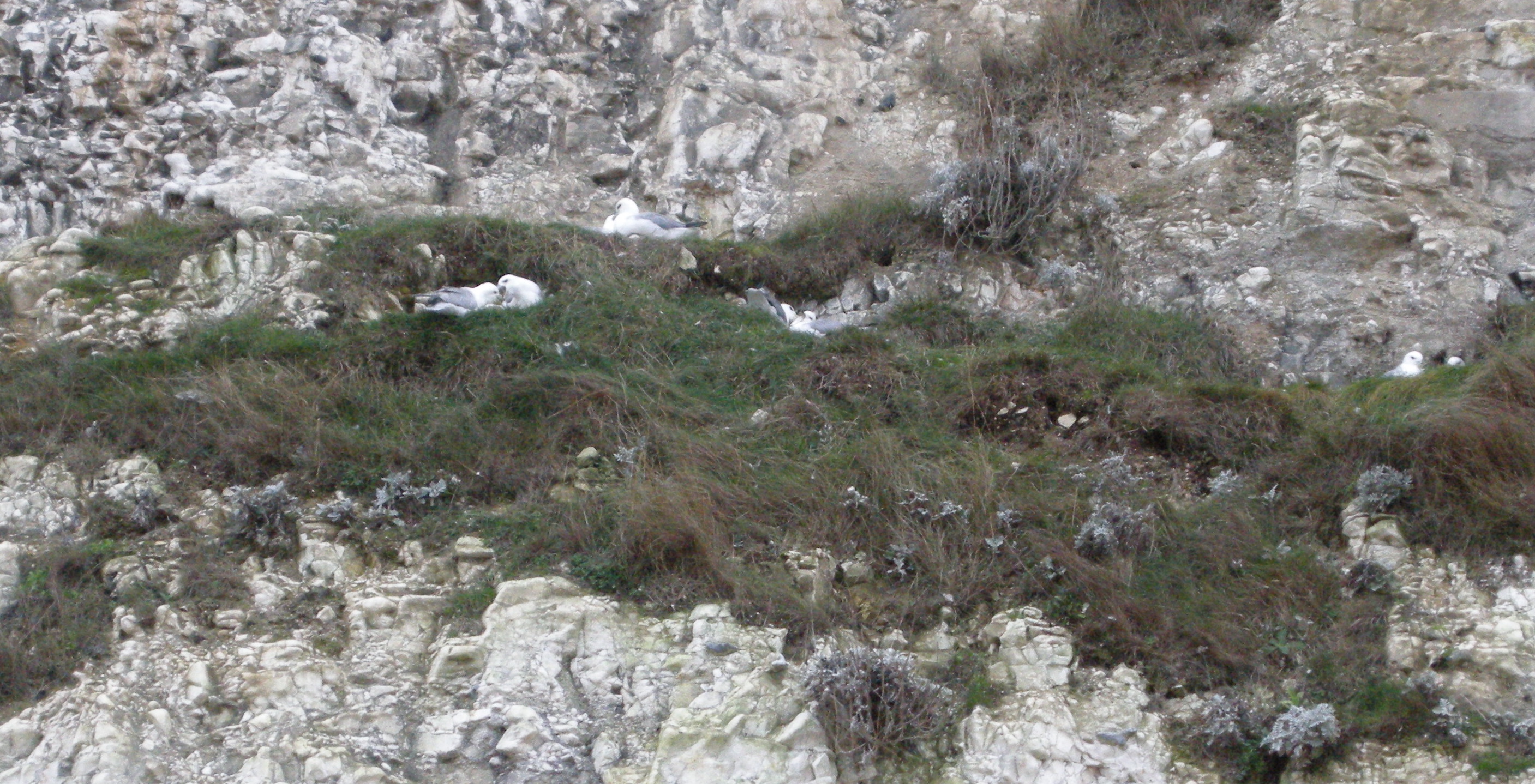
Eighteen curlews
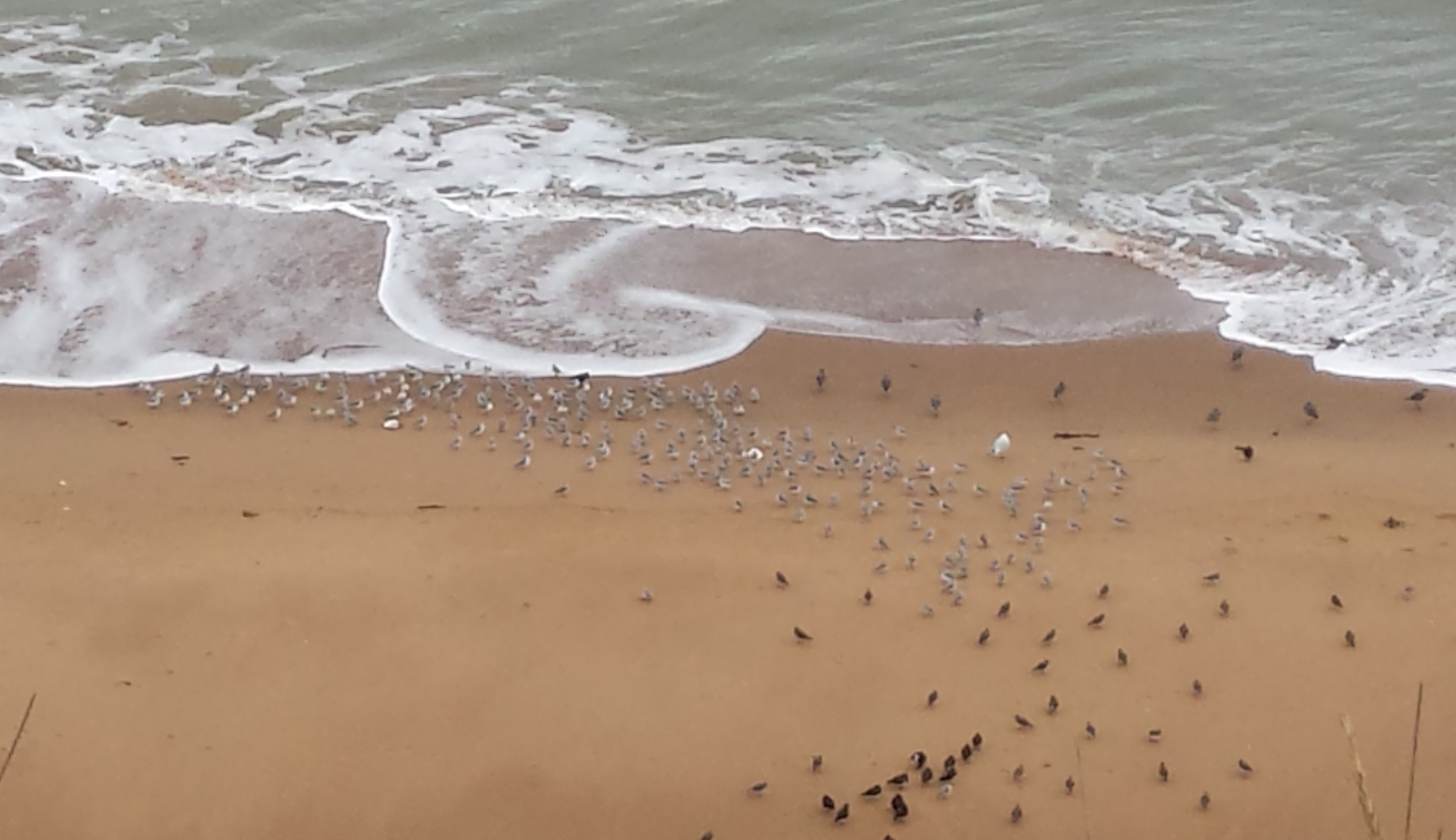
Counting birds at the end of the old year and the beginning of the new. Why count birds? It’s a habit I picked up from working in conservation. Knowing how many birds use certain sites can help make the case for protecting sites and birds. On my walk today I was pleased to see more than 200 sanderlings resting on the beach almost an hour before high tide. This was in contrast to a couple of days before, when the wind washed an already high high tide even further up the beach and the waves came at these little birds from both sides. They ran hither and thither, sometimes getting drenched by the breakers, other times flying up just in time to avoid a soaking. In between, some would run on to the sand and probe their beaks into it in search of food. Bizarrely, given there was only a few seconds between waves, others would put their heads under a wing and try to nap. It was a chaotic scene and there was just a tiny scrap of beach that seemed to be dry and where a dozen or so birds slept, presumably with one eye open in case the sea came that bit higher. Today was much calmer and those 200 or so birds slept like babes in a nursery.
Further along the coast I paid a visit to the most easterly point in Kent. Not that I’d have known that if I hadn’t seen it marked on a map I looked at recently. It – and the footpath that takes you there – is hidden away at the end of a car park. At this time of year a whole bunch of beach huts are stored on the car park in a most untidy manner. (Which may or may not explain the fly tipping in between them.) To the west of the path is a cauliflower field. Two trucks and a handful of people were engaged in picking. I passed the compass point, as it were, and turned back inland, walking up a rise which apparently qualifies as a hill – or so the street name suggests. Looking down on to the golf course I had to concur. But the sky was turning grey and the wind picking up so I headed for home.
I’m not sure what made me scan the field with my binoculars before I left. Perhaps it was remembering the words of the wise woman I met on the cliff top the other day, telling me she’d seen curlew here. I’d looked that day and seen none, but now I realised they could blend into this field and be quite hidden, allowing them to feed undisturbed.
If you enjoyed reading this please consider subscribing to my What are you looking at? newsletter on Substack. Subscriptions are currently free…
 Sophie Atherton