
Some people love doing a place up and all the choosing that involves, don’t they? The paint charts and catalogues and the excitement of finding people to fix things or fit them and seeing the changes unfold. I don’t! Not least because paint charts bear sod all resemblance to the colour of the actual paint. Meaning you have to buy endless tester pots for multiple rooms. Refurbishing the new place is feeling like an extension of the limbo of selling the previous one.
Every room is a temporary set up, every corner seems to contains some hitherto undiscovered and unexpected dirt. I have to keep repeating, to myself – affirmation style, that it will be worth it once it’s finished (and I know it will).
I have also been looking back at some of the short pieces I wrote about Norfolk wildlife before we moved here. They are a great reminder about one of our deciding factors for the move. They were originally written for my nature newsletter WAYLA? (What are you looking at?). As it was only sent to subscribers I thought I’d republish them here.
Blakeney
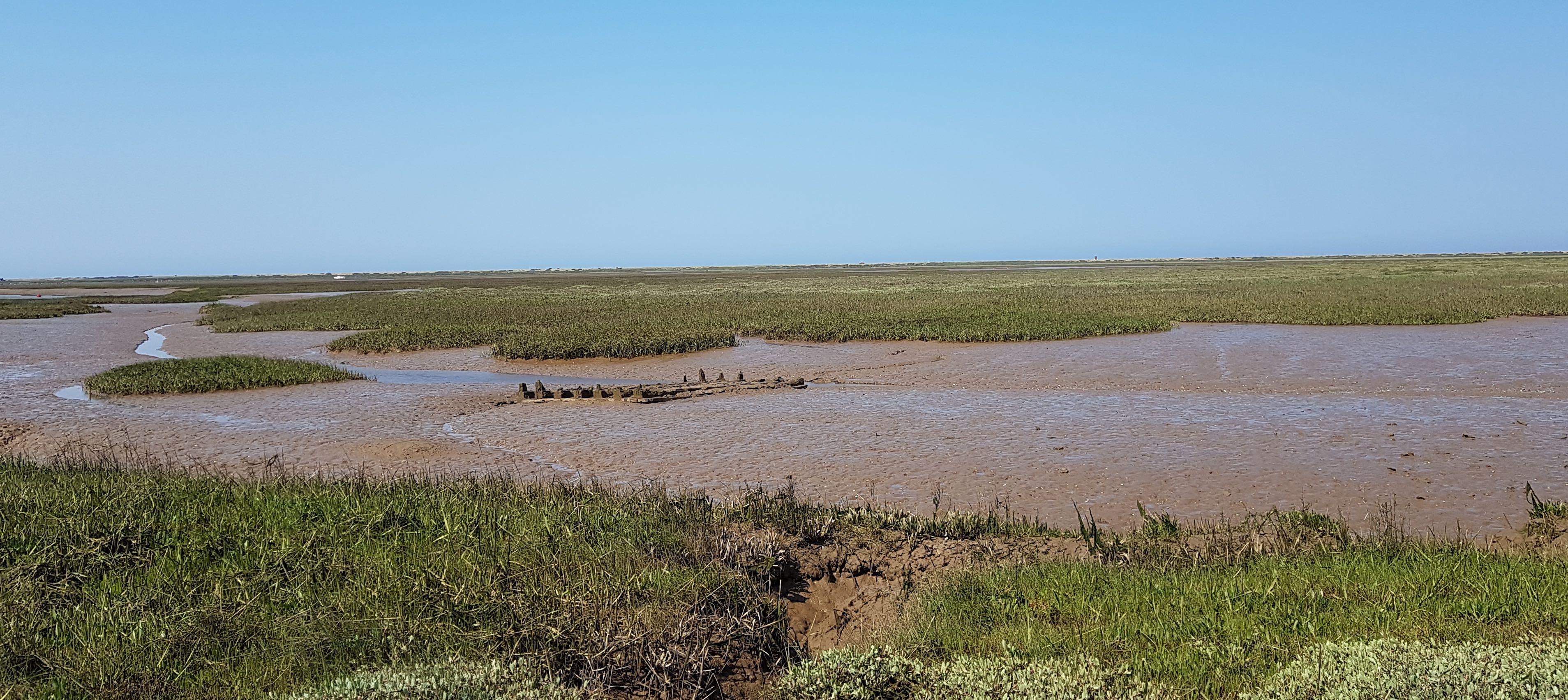
In June I had the good fortune to spend a week in North Norfolk. Mostly the weather was chilly. Jeans, jumper and a fleece weather, but then it changed. Out came the sun and on went my shorts. Beer was quaffed in the sunshine at a heritage railway station. The experience only slightly marred by deafening live music, from which there seemed no escape. Except there was, via a hot, dusty yomp to the bus stop. Nick and I were soon on the Coast Hopper bus and on our way to Blakeney for quieter beer and sandwiches. We followed this up with a walk on the marshes, where a stiff breeze provided welcome cooling from the hot sun.
It was blissful to be properly outdoors, surrounded by wildlife, leaving roads and buildings behind (albeit not very far behind). I was struck by how much more relaxed and happy I am in a place like this, compared to some man-made environment. Nick seemed to feel it too.
We passed an odd duck pond where there were pochard (among other ducks) and also some jackdaws eating sliced bread. An avocet flew over, making its ‘kleet, kleet!’ cry. Some lapwings were in the air too. I was very glad I’d decided to bring my binoculars. As we got further on to the marsh we heard, then saw, a singing reed bunting. We also saw common terns fishing, little egret, black headed gulls and shelduck. The latter felt like old friends who I hadn’t seen for a while.
The ornithological highlight though was a bird of prey that I couldn’t immediately identify, although I recognised it was a harrier – after ruling it out as a red kite because it didn’t have a forked tail. I did my best to take in all of its features. It had black wing tips, fingered wings and a grey body and also looked as if it had the shape of its overall self painted in chestnut on its body. Then I lost sight of it, but it wasn’t long before it reappeared. This time I noted it had a white rump and a pale tail, much paler than the rest of its body, and underneath it was a pale creamy buff colour. Overall I got the impression of a very motley bird, that put me in mind of a patchwork coat. Nearby waders were less impressed.
Once I had the chance to check a field guide I realised it was a male marsh harrier. Its scientific name is Circus aeruginosus, which rather echoes my impression of a motley, patchwork bird.
The pieces below were written in September (2023)
Cormorants in the mist
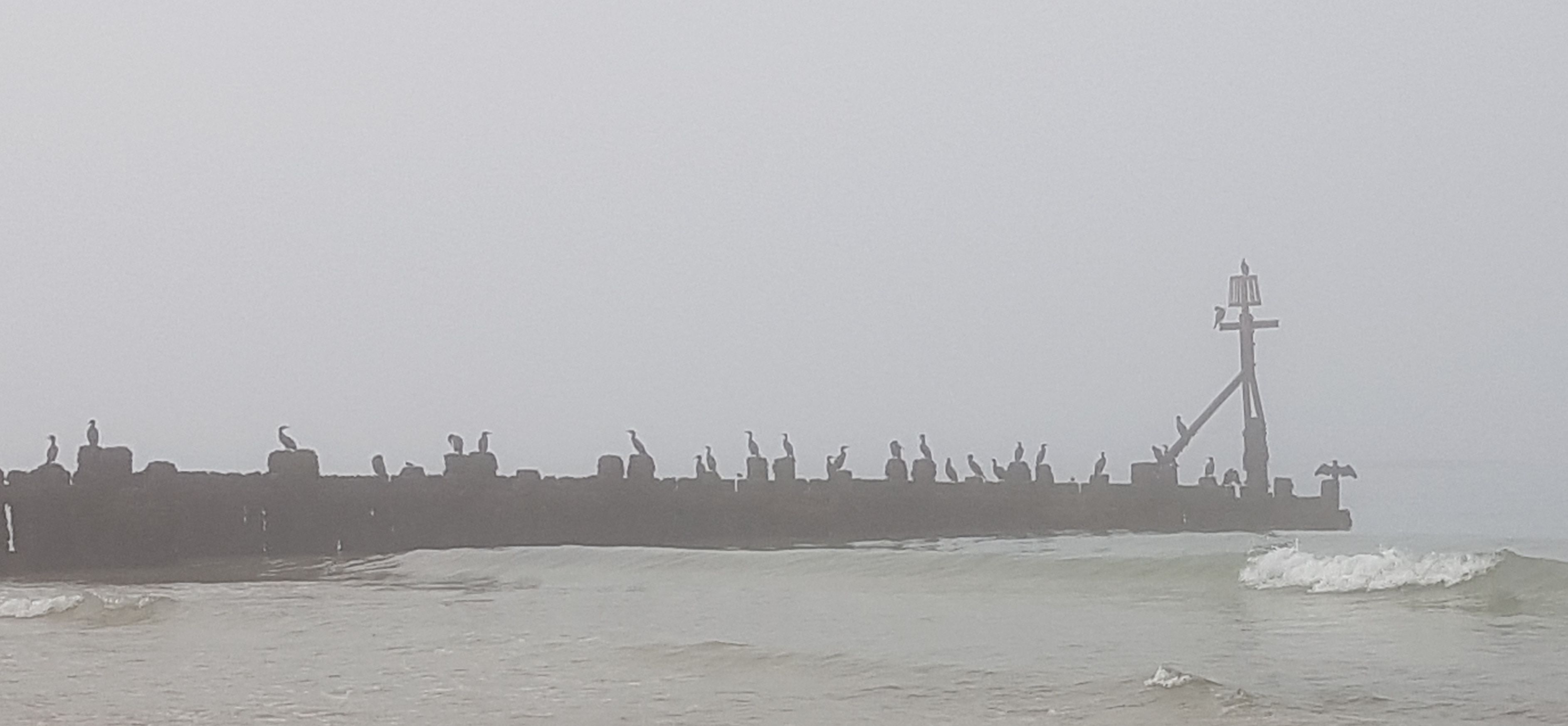
I’ve been back to Norfolk. The weather was much more like the day I went to Blakeney than the chill of the rest of that previous trip. Nick and I needed plenty of cooling coastal walks to escape the heat. Then one day a sea fret came down. That cool sort of mist which rolls in off the sea and can block out the sun, even on the hottest days. (As an aside, Chambers online dictionary defines a fret as being peculiar to the North Sea and synonymous with the word ‘haar’.) In any case, it provided a truly welcome relief from the blistering heat of the previous days. It also reminded me of the gifts seemingly inclement conditions can bring. For example it can make you listen as much, or more than, look. It can also prompt birds and other creatures to behave differently or gather in places they might not normally go. For example, a fret once gifted me a number of red breasted mergansers close into the shore in West Sussex. This one presented nearly 30 cormorants which had arranged themselves along a groyne in a pleasingly artful and rather gothic tableaux. Even better, I managed to get a photograph of them which I share with you below.
Swallow path
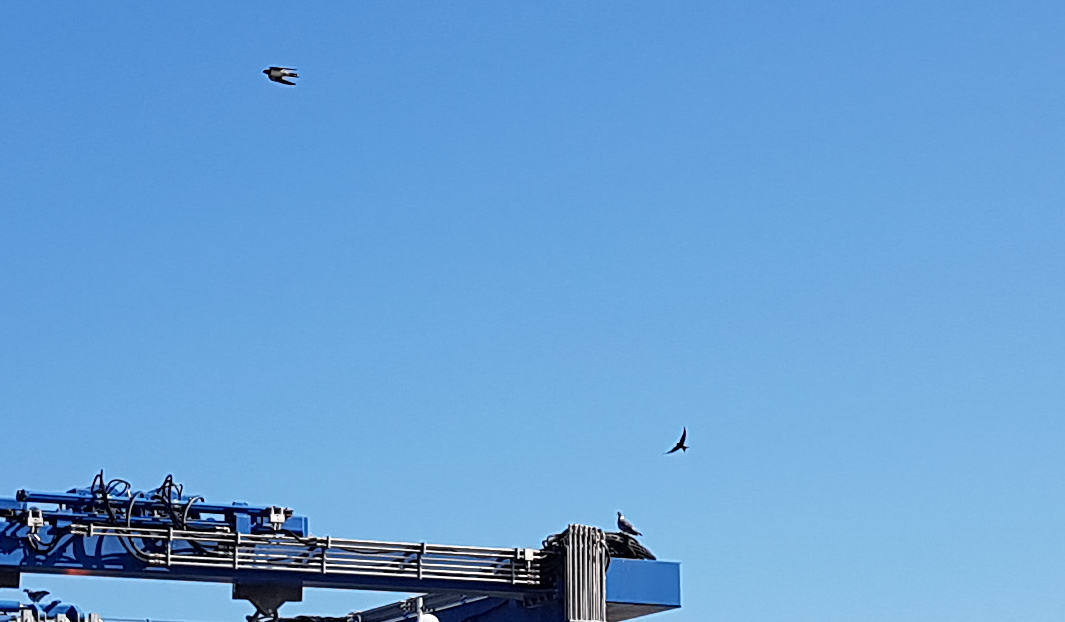
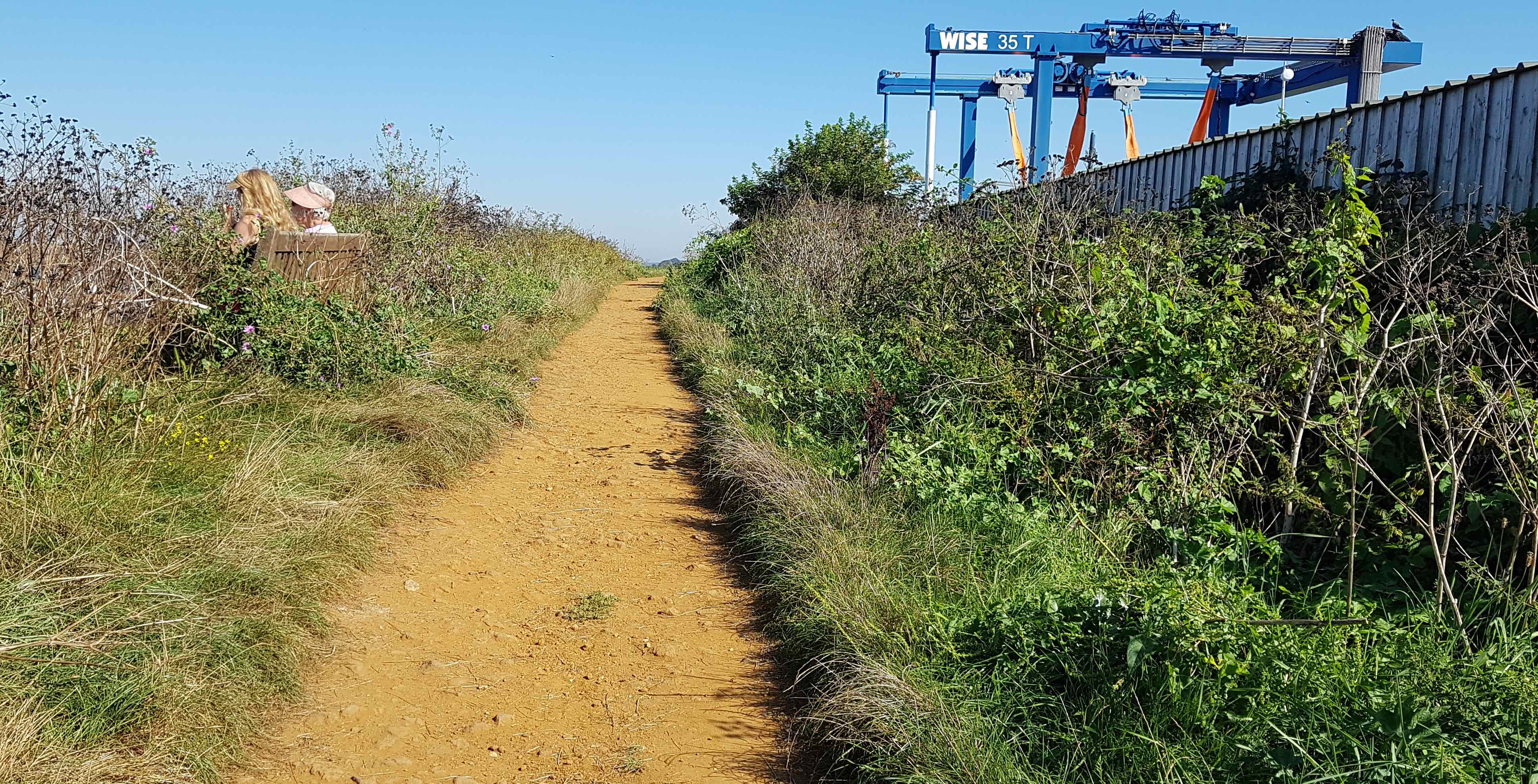
It didn’t look like the most auspicious path, this track alongside the marshes in Wells-Next-the-Sea, but that was until the swallows arrived. On the way down I spotted just a few over head. They were chirruping, zipping about, feeding and I even saw one land and rest on some sort of hydraulic lifting gear (see picture). I was glad to see them and thought that (anthropomorphism warning!) they sounded as happy to be getting ready to leave as they do when they arrive. But they were too busy to accompany us on our walk.
By the time we returned though, more had arrived. There were now at least a dozen and they were chasing each other about, flying in circuits and doing that amazing thing where they fly low – barely a foot above the ground – then suddenly peel up and away to avoid the humans which are walking on the same track. Nick decided to step off the path and see if they still jinked off to avoid getting to close to a person. I joined him, at the weedy edge of the sandy path, close to the hydraulic gear.
The first one to go by did fly up higher as it passed us, but we must have faded into the background somehow. The next flew right in front of us at about knee height, allowing us to look down on its shiny blue-black feathers. We stayed to see if we’d be lucky enough to get such a close view more than once. Whether it was one daredevil bird, or a procession, we enjoyed several more close encounters. A flash of glossy blue-black and an impression of red and white zipping by, with the added thrill of looking down instead of up as the birds flew by.
As we stepped back on to the path, perhaps because they’d got used to us, one or two flew within about a foot of my face. Others suddenly popped up from behind me and made it feel like they were flying over my shoulder. Maybe, if you have the strength and stamina to fly thousands of miles without stopping – and are about to do so – a couple of bipeds are nothing to you.
As we walked back towards the town, some sort of military aircraft flew over, high up making their farty engine sound. They seemed to be doing loop-the-loops but I was unimpressed. It just paled into insignificance next to a swallow flying by me within touching distance.
All images by – and copyright – Sophie Atherton

